How the World Celebrates Cultural Diversity Day
May 21 is the special day designated by United Nations as World Day for Cultural Diversity for Dialogue and Development. It’s a long word so most people just call the event Cultural Diversity Day or even just Diversity Day. It’s an international holiday to promote…

8 min read
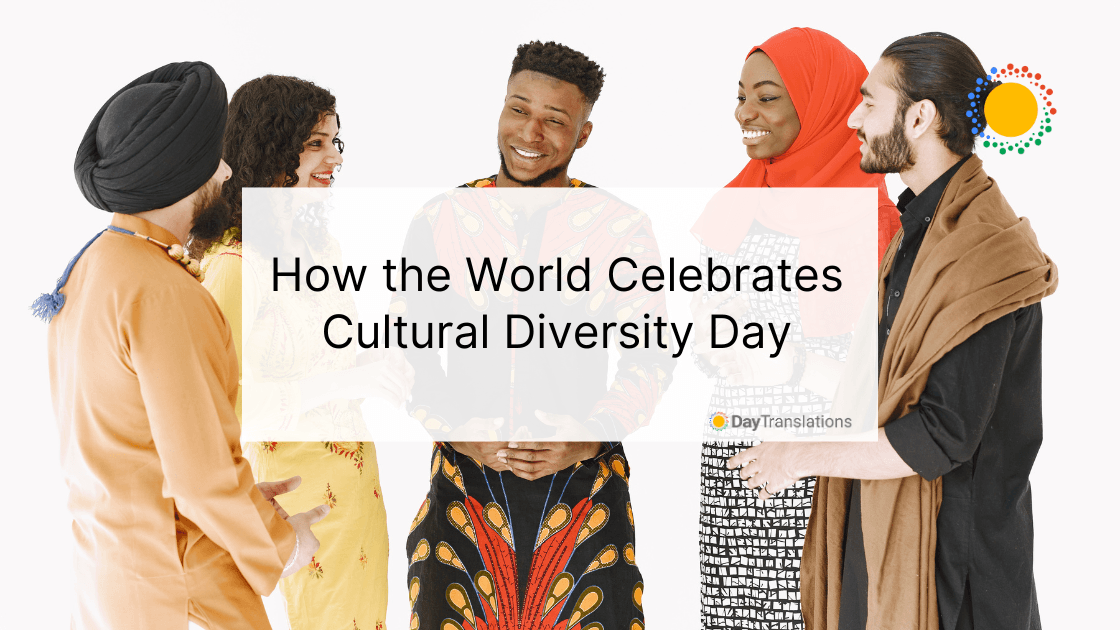
May 21 is the special day designated by United Nations as World Day for Cultural Diversity for Dialogue and Development. It’s a long word so most people just call the event Cultural Diversity Day or even just Diversity Day. It’s an international holiday to promote diversity and the issues surrounding it. The holiday was proclaimed in 2001.
Based on how the holiday came about, it is the chance to support communities to know how to live together harmoniously, and to acknowledge and respect cultural diversity. According to the history of the holiday, its creation was due to the destruction by dynamites of the two 16th century Buddha statues of Bamiyan Valley in Afghanistan that occurred in 2001.
Differences in Culture
In about 75% of the conflicts happening around the world, cultural differences are the major factors. Thus the United Nations deemed it very urgent to bridge the divide that exists between cultures, because it is essential for peace, development and stability.
Differences in culture can escalate into conflicts. At the same time, they can also be used to resolve the conflict. Culture gives people the directions that shape their judgments, perceptions, and ideas about themselves and others. Cultures are powerful forces that are often unconscious influencers.
Culture is not only about language, food, dress, traditions and customs. It is about nationality, ethnicity and race. On a deeper level, it is about generational beliefs, sexual orientations, socioeconomic class, ability, language, gender, religious and political affiliation and disability.
The vital things to remember about culture is that it frequently changes and that its existence is related to life’s symbolic dimension – the place where people often define the meaning and enact their identities. In whatever culture you belong to, you receive cultural messages that provide the information on whether something is meaningful or useless, and who they are in the world and to other people. These information constitute your identity.
Cultural Diversity for Growth
Many people, including those in developed countries, refuse to accept that cultural diversity is something that spurs development. It helps in the growth of the economy and is a way to boost spiritual, moral, emotional and intellectual life. Results from the various conventions on the subject of cultural diversity have been recorded, which became the basis to support the promotion of cultural diversity around the world. World leaders and various organizations have acknowledged that cultural diversity is an indispensable asset to reduce poverty and achieve sustainable development, as stated by the United Nations Educational, Scientific and Cultural Organization (UNESCO).
Recognition and acceptance of cultural diversity should be manifested through various means. Today, the most viable tools are media together with information and communications technology. These tools can facilitate dialogue among cultures and civilizations to foster understanding and respect.
Misunderstanding and Presumptions
In many developed and developing countries, foreigners can suffer from discrimination as a result of presumptions in misunderstanding. For example, while it is commonly accepted now, people with tattoos used to be associated with people who have been imprisoned, those who belong to a group of hooligans or mafia-style brotherhoods and organizations. Therefore, many people try to avoid them as much as possible. But in other cultures, tattoos are part of their lives and their traditions.
In Japan for example, members of the notorious Yakuza are said to chop off a part of their pinkie finger in a ritual called the yubitsume to indicate membership. But if a member is missing a finger, it is often due to offenses committed. However, not all people with a stunted finger is a member of the Yakuza.
Wherever you go it is difficult to avoid stereotypes, as people have their own presumptions about foreign cultures. Most people typically accept this fact because their own people believe that same thing. They do not bother to look deeper to find out why foreigners have those specific cultural characteristics.
When people rely too much on stereotypes when they deal with foreigners, it can build a barrier. When they fail to understand how behaviors and traits differ in other cultures, misunderstandings follow.
Celebration of Cultural Diversity Day
The annual celebration of Cultural Diversity Day is a chance to heighten the understanding of how valuable cultural diversity is. It is also a means to promote the four goals of UNESCO’s Convention on the Protection and Promotion of the Diversity of Cultural Expressions in 2005. These goals are:
- Support/promote sustainable systems to govern culture
- Achieve an equal flow of cultural services and goods, improve mobility of cultural professionals and artists
- Integrate culture in the frameworks of sustainable developments
- Promote fundamental freedoms and human right
How Can You Celebrate Cultural Diversity Day?
Around the world, people celebrate Cultural Diversity Day in their own way. Many hold events and various activities to acknowledge the cultural diversity in their country and acknowledge the present of ethnic communities, indigenous communities and immigrant communities.
There are so many ways to foster understanding and embracing cultural diversity, and here are a few ideas that you can initiate in your neighborhood.
- You can coordinate with your local library or museum to put up an exhibit of art works from other cultures. Most cities hold exhibits for a limited time, while some groups organize touring exhibits. The library can prepare a reading area where translated books from other countries can be read for the day.
- Check events happening around your neighborhood to celebrate cultural diversity and find out how you can join.
- You can have a potluck party and invite your friends or colleagues from other countries to share their traditional food, dessert or even costumes. You can do the same thing through your church or school.
- Watch a movie in another language (with subtitles) to learn a different perspective in life.
- Read the works of famous philosophers from different countries.
- If you haven’t traveled to other countries and joined in their traditional festivals, look for videos online so you can learn the traditions of other countries.
- Listen to music from other cultures. Many libraries carry different types of music as well as videos that you can borrow.
Importance of Cultural Diversity Day
Celebrating Cultural Diversity Day is not only about recognizing cultural differences. It is about understanding the concept of culture, which is the embodiment of who and what you are.
Each person makes himself or herself know to others through the differences in language, values, intelligence, race, politics, gender, religion, philosophy and other elements. Diversity Day is a means to celebrate those differences.
In many ways, the phrase “think globally but act locally,” has provided the inspiration to understand that the world is in fact a multicultural society wherein each culture has a role to play. The existing systems around the world, including governments, religions, cultures and economies depend on the interdependence on these systems. In this manner, the differences become the strengths through collaboration, which can lead to peace.
Celebrating cultural diversity has cemented these ideas:
- The key to knowledge is tolerance.
- It allows people to gain new perspective on the how people live around them and around the globe.
- It helps people to be open-minded and respect other cultures.
- When cultural differences are acknowledged, it educates and unites people.
- It helps to understand the perspectives of other cultures while broadening their own.
- It gives people the chance to experience other cultures and add to their knowledge.
Cultural diversity helps people become more aware of their own culture. It gives them a sense of pride. When people understand and accept cultural diversity, it can lead to community progress as well as personal growth. Celebrating cultural diversity is a way to accept that coming from a different culture is not a bad thing.
Acknowledge the Difference in Culture Through Language
People around the world have to acknowledge and recognize that they are different from one another, but at the same time, this difference should not alienate them. In fact, they should appreciate it by learning about what makes them different from other people. One of the most obvious sign of cultural difference is in the language. Cultural Diversity Day should be observed every day, if possible.
People appreciate foreigners who try to speak their language while visiting their country, but to foster better understanding, especially on a more professional or intellectual level, translation is essential. Translation facilitates communication and understanding. It puts people in an equal footing, because even if they speak different languages, they can still understand one another.
Need Accurate Translations? Work Only with the Best!
For accurate translation of any type of written document, work only with the best – Day Translations, Inc. We are a professional translation company offering a full suite of language services so you do not have to look for other service providers. Our translators are all native speakers and living in-country to ensure accuracy in translation in more than 100 languages. Give us a call anytime at 1-800-969-6853 or send us an email at Contact us. We are open 24/7, every day of the year, so we can attend to your request for translation immediately

Written by
Day TranslationsThe Day Translations editorial team is composed of seasoned linguists, translators, and localization experts with a deep passion for language and cross-cultural communication. With decades of combined experience in translation, interpreting, and multilingual content creation, the team brings a unique perspective on the evolving world of global communication. Their insights reflect both academic expertise in linguistics and hands-on experience. Each article is crafted to inform, inspire, and support professionals navigating the multilingual landscape.
Stay in the loop
Get the latest articles on translation, localization, and language delivered straight to your inbox.