Translation vs Transliteration: What’s the Real Difference?
When you’re reading text in another language, do you know what you are really seeing? Translation conveys the meaning from language A to language B. But transliteration transforms words from one writing system to another—like turning हिंदी into Hindi—so that readers can pronounce the words,…

14 min read
When you’re reading text in another language, do you know what you are really seeing? Translation conveys the meaning from language A to language B. But transliteration transforms words from one writing system to another—like turning हिंदी into Hindi—so that readers can pronounce the words, even if they don’t understand them.
In this article, we’ll take a look at the core difference between translation and transliteration, explore real-world use cases, discuss how to avoid common pitfalls, and share a practical decision chart to help you choose which one to use. Let’s cut through the confusion and clarify exactly what the difference is between translation and transliteration.
What Is Translation?
Translation is the art of converting meaning from one language to another. It involves interpreting context, intent, tone, and cultural nuance in the source language and recreating that message in the target one.
Here are some industries where we see translation at play:
- Food & Drink: Coca‑Cola translated its worldwide slogan “Open Happiness” to “Destapa Felicidad” in Spanish-speaking countries. They could have chosen a more literal translation of the word “open” to “abre,” but instead opted to use the term “destapa,” which conveys both the action of opening a bottle and discovering something inside. The marketing translators on Coca-Cola’s team skillfully took their knowledge of the two languages and cultures to execute a successful global ad campaign.
- Healthcare: Pharmaceutical companies that sell products worldwide must hire expert translators to convert pamphlets and instructions into different languages. Their translation must convey exact dosage and warning information to avoid dangerous misunderstandings and life-threatening consequences.
- Tech: App interface translations (like on Instagram or TikTok) are adapted regionally so, for example, Filipino users get UI text in either Tagalog or Bahasa, making it more accessible and more engaging.
Unsuccessful translation can lead to misunderstandings in the best case scenario, and damage brand reputation in the worst. On the other hand, thoughtful translations help global brands build trust and appeal, allow asylum seekers to seek refuge in other countries, and facilitate multilingual communication in today’s globalized world.
What Is Transliteration?
Transliteration is a subset of translation focused on accessibility and representation. It maps characters across different writing systems, also known as scripts, to guide pronunciation.
Transliteration understands that there are over two hundred different writing systems used around the world. In English, we use the Latin script, which is also employed by German, Spanish, French, and other Romance languages around Western and Central Europe.
On the other hand, Greek, Russian, Arabic, and Japanese are just a few of the hundreds of different scripts used in other parts of the world. Each of these languages has their own symbols and pronunciation systems to communicate.
Transliteration takes those symbols and converts them into the target script to facilitate their pronunciation by foreigners who do not know how to read the original language.
Here are some examples:
- Did you know that the name of the city Moscow is actually a translation of a transliteration? That’s right. The Russian spelling for the city is Москва, but because Russian uses a different alphabet, that word is transliterated into the Latin alphabet as Moskva. This name is then translated to Moscow for English speakers (Moscú for Spanish speakers, Moscou for French speakers, etc.)
- In Athens, Greece, tourists anxious to see ancient ruins of the Parthenon would have a hard time interpreting the name Παρθενών. Thankfully for them, it has been transliterated to the Parthenōn in the International Greek Alphabet (IGA), or as Parthenonas in Modern Greek.
- Beginning learners of Japanese first learn the sounds of the language before moving on to tackle the writing systems. Therefore, こんにちは is written as Konnichiwa to help non-Japanese readers say “hello.”
Transliteration often appears in proper names, technical terms, or cultural references, like movie titles or person names, that can’t or shouldn’t be translated.
Difference between Translation and Transliteration
Below is an extended comparison table that highlights the key differences between translation and transliteration:
| Translation | Transliteration | |
| Focus | Meaning & intent | Sound & script mapping |
| Goal | Communicate text and meaning | Guide pronunciation |
| Process | Contextual understanding, culture, tone | Letter-by-letter or phonetic mapping |
| Product | Words in target language conveying original meaning | Target script version of original words |
| Examples | “Buongiorno” → “Good morning” | βιβλίο → vivlío, книга → kniga |
| Tools | CAT tools, localization platforms | Romanization tables (ISO, Hepburn, etc.) |
| Errors | Bad translation, false friends | Inaccurate or inconsistent romanization |
| Uses | UI, marketing, legal, product text | Names, addresses, brand names, transliterated menus |
When to Use Translation vs. Transliteration
Based on the differences noted above, let’s take a look at how to decide whether to use translation, transliteration, or a combination of the two:
| Situation | Translation | Transliteration |
| Showing menu items (e.g., Sashimi) | ❌ because the meaning is understood | ✅ yes, preserves Japanese name and pronunciation |
| Introducing a local hero in a novel | ❌ unless specifically requested for localization, leave proper names untranslated | ✅ transliterate names to assist in their pronunciation |
| Displaying map labels | ✅ translate generic words (e.g., “river”) or commonly translated city/country names | ✅ transliterate place names (e.g., 北京 → Beijing) |
| Global marketing slogan | ✅ needed for resonance | ❌ won’t carry meaning across cultures |
| Offering pronunciation of a difficult name | ❌ translation changes pronunciation | ✅ helps non-speakers read and say it correctly |
How to Decide: Translation vs. Transliteration Flowchart
Is it a proper noun or brand name?
- Yes > Transliterate (e.g., 北京 → Beijing, Москва → Moskva. You could also provide a translation in parentheses, if appropriate.
- No > Is the meaning crucial for readers?
- Yes > Translate
- No > Keep transliteration and consider footnote/explanation
Pro tip: In footnotes, make sure to clearly mark your explanations. For example: *Translated/transliterated content appears in [ ].
Why Use Translation over Transliteration?
Translation helps ensure your message is clearly understood and culturally relevant, especially when the target language shares the same alphabet.
- Ease of understanding: For example, the baseball term “home run” is translated into Spanish as jonrón. And while this assists in pronunciation, it isn’t transliteration. It’s a loanword adapted to Spanish spelling and pronunciation. Using the original English phrase wouldn’t make sense to many Spanish speakers unfamiliar with American sports.
- Audience engagement: Instead of using literal renderings of foreign phrases, translation lets you find culturally equivalent expressions. For instance, in Spanish gambling slang, salta la banca conveys the same feeling as a Japanese idiom about winning big, but it’s adapted for local understanding.
- Better SEO and user experience: App interfaces are easier to use when terms like “Settings” or “Help” are translated into local equivalents like Ajustes or Ayuda. Simply reusing English words, even though the script is the same, doesn’t provide clarity or localization.
Why Use Transliteration over Translation?
Transliteration is the better choice when it’s important to retain original pronunciation or protect brand identity.
- Preserves brand recognition: Global brands like IKEA, Pepsi, and Häagen-Dazs often retain their original names across languages. These names are transliterated phonetically (using local scripts), not translated, ensuring the brand is instantly recognizable.
- Helps with pronunciation: Chinese beer brand 青岛 is transliterated as Tsingtao in English. This is an approximation that allows foreign consumers to pronounce it more easily than the direct pinyin spelling Qīngdǎo.
- Essential for names and user-generated content: Transliteration is often used for personal names. For instance, the Arabic name “علي” becomes Ali in English, not because it has a different meaning, but because readers need a way to pronounce it.
Pro tip: Provide both transliteration and translation where clarity matters. E.g., 京都 (Kyōto) for the city of Kyoto, Japan.
Real-Life Examples Across Languages
To better understand the practical use of translation vs. transliteration, it helps to look at how real brands, places, and pop culture adapt their names or messages across languages. The following five examples highlight how each approach serves a different purpose depending on the context, whether it’s preserving pronunciation, adapting cultural meaning, or both.
1. Netflix’s “Stranger Things”
- Translation: In Spanish-speaking markets, the title becomes Cosas más extrañas (“Stranger Things”), but this version often feels clunky. Instead, many markets opt to keep the title Stranger Things in English to preserve brand recognition. Meanwhile, slogans or extended titles are translated, for instance, in the title of the book Stranger Things: Mundos del Revés (literally, “Upside Down Worlds”).
- Transliteration: In Japan, the title is rendered as ストレンジャー・シングス (Sutorenjā Shingusu)—a phonetic transliteration that maintains brand recognition and supports pronunciation in katakana. You can see this transliteration, along with a hybrid of use of English terms in the following ad for a Stranger Things-themed energy drink.

The Japanese energy drink brand ZONe uses a combination of translated, transliterated and English script for its Stranger Things-themed beverage © ZONe
Why it matters: Media titles often balance brand identity and local familiarity. When meaning is too abstract or doesn’t resonate, transliteration keeps the name intact while letting viewers pronounce it locally.
2. Pepsi’s Marketing in China
- Translation Misfire: Pepsi’s original slogan “Come alive with the Pepsi Generation” was mistranslated in Chinese as “Pepsi brings your ancestors back from the dead.” This error changed the meaning, not just the words—leading to widespread confusion and mockery.
- Lesson: Accurate translation that respects cultural and linguistic nuance is essential. Pepsi has since learned its lesson and incorporated transliteration and thoughtful localization in its marketing campaigns.
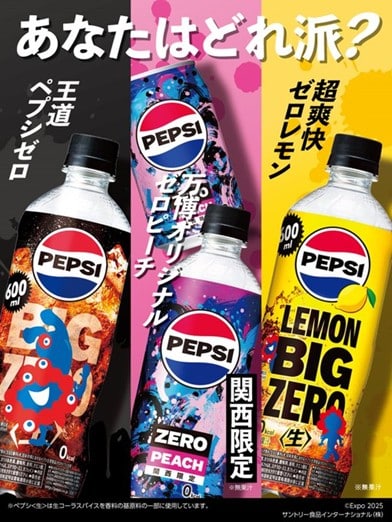
Pepsi has learned its lesson and updated its marketing strategy using localized techniques that combine translation, transliteration, and English script © Pepsi
Why it matters: This shows the risk of poor translation and the value of culturally-sensitive transliteration in brand naming.
3. McDonald’s “Big Mac”
- Translation: In France, the “Big Mac” remains Big Mac because it’s a registered trademark, but marketing phrases and menus are fully translated to appeal to French customers (e.g., “Deux menus Big Mac, s’il vous plaît”).
- Transliteration (or Non-Translation): In China, the “Big Mac” is sometimes referred to as 巨无霸 (Jù wú bà), meaning “giant ruler” or “tyrant”—a name chosen to appeal to local preferences for bold, aspirational food names while still matching the product.

Trademarked English names for McDonald’s hamburgers have already been incorporated into the vocabulary of French fast food diners © McDonald’s France
Why it matters: This is a good example of using translation for descriptions and creative transliteration for branded terms, showing a hybrid localization strategy. For a deep-dive into the cultural and linguistic considerations of McDonald’s expansion into France, check out this thesis.
4. Pokémon Characters
- Translation: Character names often change dramatically between languages to convey traits. The fire lizard Charmander becomes Salamèche in French, referencing a salamander and flame, and Glumanda in German—short for “glut” (ember) and “mander” (salamander).
- Transliteration: However, the word “Pokémon” itself is often transliterated for script-based languages: ポケモン (Pokémon) in Japanese katakana or 포켓몬스터 (Poketmonseuteo) in Korean.

Pokemon Instagram ads in Korean © Pokemon
Why it matters: Pokemon names tied to character traits benefit from translation, while brand terms like Pokémon remain consistent through transliteration.
5. Bilingual Dubai Tourism Posts
- Translation: To facilitate understanding and encourage English speakers to visit the Middle Eastern city known for its luxury and abundance, the Dubai Department of Economy and Tourism features both English and Arabic on all of its Instagram posts. Generic terms are translated. For example, “Wildlife Sanctuary” has been translated to English in the post below.
- Transliteration: Meanwhile, proper names like Ras Al Khor have been transliterated for international visitors who need help pronouncing them. The same instagram profile also opts for transliteration over translation when it comes to common Arabic sayings or greetings, such as Eid Mubarak, for sharing well wishes around holidays.

Bilingual Instagram posts for Dubai events in English and Arabic © Dubai Department of Economy and Tourism
Why it matters: Tourism marketing uses both methods strategically. That is, place names are transliterated for recognition, while descriptors are translated to aid comprehension.
Common Mistakes People Make
Even well-meaning efforts to adapt content across languages can go wrong. Here are some of the most frequent pitfalls, and why they matter:
1. Using Translation Instead of Transliteration
Sometimes, a word or name is meant to sound the same, not be reinterpreted. For instance, the Greek word geōgráphos (meaning “geographer”) should be transliterated into Greek script as γεωγράφος to preserve pronunciation. But if someone tried to translate it literally as “earth writer,” it would confuse the audience or sound bizarre.
2. Using Transliteration When Translation Is Needed
On the flip side, transliteration can fail when the meaning is more important than the sound. For example, translating the English baseball term “home run” into Japanese as ホームラン (hōmurun) may be phonetically accurate, but it means little to people unfamiliar with baseball. A better approach might be to translate the idea, perhaps describing it as a major victory or point-scoring play, depending on the context.
3. Inconsistent Transliteration Standards
Using different transliteration rules within the same document can cause confusion. For example, seeing Putin and Pūtin used interchangeably in a single text makes it unclear whether they refer to the same person. This inconsistency creates confusion and undermines your professionalism.
Pro tip: Stick to one transliteration system per language (for instance, ISO, ALA-LC, or pinyin) and document your style guide.
4. Ignoring Cultural Context
Some terms don’t need to be translated or transliterated, but they do need context. Take the Mexican dish pozole. Simply writing “pozole” in English text might leave international readers clueless. Instead, a short explanation like “pozole, a traditional Mexican hominy stew” bridges the cultural gap and shows respect for the audience’s knowledge level.
Commonly Translated/Transliterated Words
| Phrase | Translation (to English) | Transliteration |
| 北京 | Beijing (China) | Běijīng |
| Москва | Moscow (Russia) | Moskva |
| Γιάννης | John | Giánnis (Greek) |
| 東京 | Tokyo (Japan) | Tōkyō |
| Киев | Kiev (Ukraine) | Kyiv |
| שלום | “hello” or “peace” | shalom (Hebrew) |
FAQs
What is the main difference between translation and transliteration?
Translation conveys meaning by converting words from one language to another.
Transliteration keeps the original pronunciation by changing the writing system or spelling without translating the meaning.
When should I use translation instead of transliteration?
Use translation when you need your audience to understand what something means, especially for user interfaces, marketing content, product descriptions, or anything where context and clarity are essential.
When is transliteration better?
Use transliteration when you need to preserve brand names, proper nouns, or technical terms that shouldn’t be translated, but should still be readable and pronounceable in the target script.
What if I have a multilingual audience but only room for one version?
In this case, translation into English usually wins, especially if comprehension is key (like on signage or in a mobile UI). However, if it’s a brand name, product name, or proper noun, stick with transliteration to keep the identity intact.
Pro tip: You can also combine the two. For example: “Welcome to Kiev (Kyev)”.
What script should I use for each language?
Always use the native script of the target language whenever possible. Here’s a quick reference:
- Arabic → Arabic script (العربية)
- Hindi → Devanagari script (हिन्दी)
- Russian → Cyrillic (Русский)
- Chinese → Simplified (简体中文) or Traditional (繁體中文), depending on the region
- Spanish, German, French → Latin alphabet
Can I use machine translation for transliteration?
A: Some tools like Google Translate or DeepL support transliteration, especially for languages like Hindi, Arabic, or Japanese. However, these are often inconsistent. For branding, signage, or marketing, it’s best to rely on human linguists or TMS tools with custom rules. Check out this article to learn more about advances in machine transliteration.
How does SEO factor into translation vs. transliteration?
Search engines favor translated keywords for most content. For example, translating “Buy shoes” to Comprar zapatos will yield better results than writing Buy zapatos. Use transliteration only for terms without a native-language equivalent, such as brand names or product SKUs.
Conclusion
Understanding translation vs transliteration is more than an academic feat, it could be essential for you to communicate effectively with a global audience. Use translation for meaning, context, and tone. Use transliteration to preserve pronunciation or brand identity. When in doubt, combine both to ensure clarity, brand consistency, and cultural resonance.
Not sure where to start? Day Translations can help your content truly connect to audiences, no matter what the language or the script.

Written by
Kimberlyn Owens-HughesKimberlyn has 20+ years of experience in the language field. With a BA in Spanish and an MA in Teaching English as a Foreign Language, she moved from her home in Nashville, Tennessee, to Valparaiso, Chile back in 2006. Soon after, she began collaborating as one of Day Translations' first Spanish-to-English translators. Over the years, she has shared her passion for language as an English instructor at local Chilean universities, and as a professional translator for the financial, legal, academic, and tourism sectors. She enjoys learning new things in her research and work as a translator, but her true love lies in literature, writing, learning new languages, and travel. As Day Translations' Content Manager, she is able to cultivate this love of language and writing to share her passion and expertise with the world.
Stay in the loop
Get the latest articles on translation, localization, and language delivered straight to your inbox.