Localization vs Translation: What’s the Difference and Why It Matters
What Do Translation and Localization Mean in Practice? If you’re reading this article, you probably know translation as the conversion of text from one language to another. In fact, did you also know that humans have been translating messages between languages since at least 2500…

13 min read
What Do Translation and Localization Mean in Practice?
If you’re reading this article, you probably know translation as the conversion of text from one language to another. In fact, did you also know that humans have been translating messages between languages since at least 2500 BC?
Yes, that’s right. Translators have been mediating between languages and facilitating communication for well over 4,000 years.
So what’s the hype around localization? Since the 1980s, and particularly with the rise of computers and software, developers started to realize that in order to sell their products around the world, they needed to not only translate into other languages, but also understand the unique sales psychology of different global markets.
In short, if translation focuses primarily on text accuracy, localization takes it a step further to guarantee cultural relevance, preference, and appropriateness. While translators make messages accessible to a larger general audience, localizers adapt that message to a specific regional subset, considering local slang, cultural nuance, and country-specific formats.
Translation vs Localization: Practical Examples
To get a better understanding of the difference between translation and localization, let’s look at what happens when we merely translate content versus localizing it:
| Original
(Master Class Ad written for a Chilean Spanish audience) | Literal Translation | Localization
(for U.S. customers) |
| La clase magistral será el sábado 14/6 a las 18hs. | The master class will be on Saturday 14/6 at 18 hours. | The master class will be on Saturday, June 14th at 6 pm. |
| La inscripción cuesta $10.000. | Registration costs $10.000. | Registration costs $10. |
| Inscríbase al Wsp: +56 9999 9999 | Register by Wsp +56 9999 9999 | Register by e-mail at master@class.com |
As you can see, localization goes beyond mere translation to consider cultural differences such as:
- Date formats
- Use of military time or am/pm
- Currency and conversion
- Preferred communication methods
If you’re still wondering what is localization in translation, here’s another example of how messages can be localized for specific regions, even when those regions speak the same language!
| Original
(United States) | Localization
(Chile) | Localization
(Argentina) | Localization
(Spain) |
| Stop by our café for a free hot dog and soda! | Pásate por nuestro café y llévate un completo y una bebida gratis. | Pasá por nuestro café y llevate un pancho y una gaseosa gratis. | Pásate por nuestra cafetería y llévate un perrito caliente y un refresco gratis. |
Three countries, three ways to say hot dog and a soda! Localization helps you craft the best message to connect with your target market.
Translation vs Localization: Differences at a Glance
How do you know when to use translation vs localization? Let’s take a quick look at some of the key differences between the two services. These factors must be considered when deciding between hiring a translator or working with a localization manager:
| Feature | Translation | Localization |
|---|---|---|
| Purpose | To convert content from one language to another | To adapt content to a specific locale and culture |
| Scope | Language-focused | Language, imagery, tone, formatting, and cultural norms |
| Units of work | Words, sentences, paragraphs | Entire user experience (text, images, formats, etc.) |
| Examples | Legal documents, medical records | Websites, mobile apps, marketing campaigns |
| Tools | CAT tools, glossaries | TMS, localization QA tools, cultural consulting |
| Content type | Informational or legal | User-centric or market-focused |
| Cost and time | Generally lower | Higher due to complexity |
| Required team | Translator | Translator, cultural consultant, engineer, designer |
| Cultural adaptation | Minimal | High |
| File and format adjustments | Only as needed for comprehension. | Common (date formats, currencies, UI design, etc.) |
When to Use Translation Only
When content is strictly informational or technical (e.g., user manuals, contracts).
- In these cases, the ultimate goal is comprehension. The target audience merely needs to understand what they’re reading. They’re not being sold anything, nor is user experience a top priority.
When budget is limited and broad accuracy is sufficient.
- Sometimes simple translation is the first step to moving into a new market when the cost of localization can’t be covered.
When you need fast turnaround and consistency.
- Translations require fewer steps (translation and proofreading) and can accommodate tighter deadlines than complex localization services, where local experts, developers, and UX engineers must be engaged.
When Localization is a Must
When launching a product or website in a new market.
- People buy from companies they trust, and speaking someone’s language is key to gaining that trust. If a website in Spanish feels like it’s been cheaply translated by someone in China, that’s a huge red flag for shoppers. And a likely deterrent for sales.
When marketing campaigns rely heavily on tone, humor, or cultural reference.
- Are local slang and humor necessary for global sales? Not always. But companies that invest in localized marketing campaigns usually see a massive ROI. Their slogans are often eye-catching and draw attention to their products more than humdrum neutral language.
When UX matters: apps, software, or games need to feel native to users.
- An easy and fun user experience is essential to keeping users engaged. With so many videogames, apps, and software products out there competing for attention, anything that feels off to users is going to have them clicking elsewhere.
Choosing the Right Strategy for Your Brand
Deciding between translation and localization isn’t one-size-fits-all. You need to understand your content, audience, and business goals. If you’re entering a new market, localization is often the best bet for building cultural relevance and user trust.
If your content is strictly informational or regulatory, such as legal disclaimers or instruction manuals, a well-executed translation may get the job done. Finally, you also might consider the importance of cultural sensitivity, the complexity of your product, and how much you can invest in adapting your message.
In many cases, the best localization strategy is a hybrid one. Translate legal, technical, and support materials to ensure clarity and compliance. Localize marketing campaigns, websites, and apps to spark engagement and emotional connection.
By balancing the two, you can best assign resources, both technological and human, to make sure you’re gaining efficiency while not sacrificing quality.
Real-World Examples: Translation vs Localization in Action
Now that we get the gist of why companies might choose translation over localization services, and vice versa, let’s take a look at five real-world cases.
1. Alvear Palace Hotel: A Website to the World
The 5-star hotel, nestled in Buenos Aires’ prestigious Recoleta neighborhood, was first inaugurated in 1932 to accommodate the influx of European and American visitors, including royalty, celebrities, and dignitaries from around the globe.
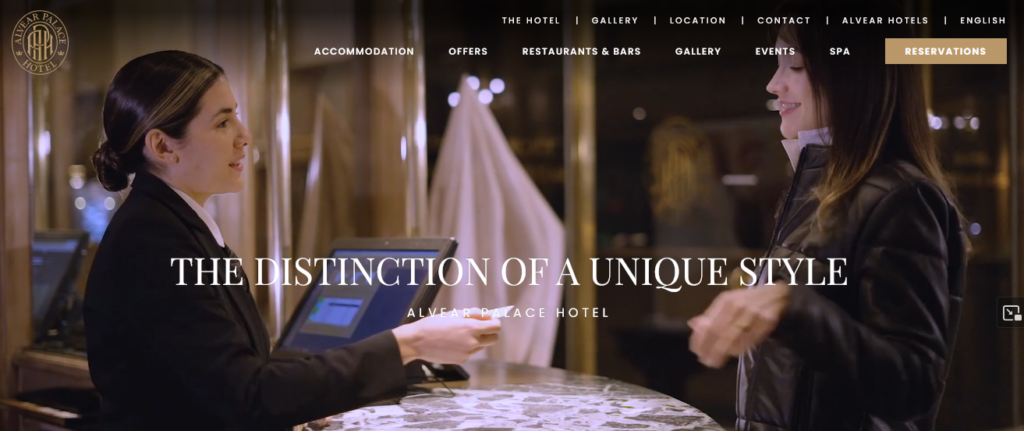
When the time came for the opulent Argentinian hotel to create a website, developers knew they needed to create a website that was accessible for its high-paying international customers.
In this case, developers decided it would be more effective to hire a trusted translation agency to translate the original Spanish website into English, rather than attempting a complex localization project to convert the website into multiple languages.
This choice was made considering the hotel’s exclusive, elite market. Regardless of their country of origin, the hotel’s guests are well-traveled and highly-cultured individuals accustomed to interacting in English as a global language.
Therefore, the website (and eventually all guest services materials) was translated into neutral American English, easily understood by the hotel’s native and non-native English-speaking clientele.
2. Temu: Chinese E-Commerce Goes Global
Temu is an online marketplace launched in 2022 by PDD Holdings, the parent company of Chinese e-commerce giant Pinduoduo. Initially introduced in the United States, Temu rapidly expanded its presence to other countries, first to other English-speaking countries such as Australia and New Zealand, followed by Europe, and finally reaching Latin America and South Africa in 2024.
Temu, along with other Chinese e-commerce platforms like Shein and Ali Express, have had to address consumer skepticism as a significant hurdle to their global market expansion. Concerns over product quality, data privacy, and ethical sourcing have fueled distrust among consumers in various countries.
For this reason, one of Temu’s top priorities when building trust across all 49 countries where it operates was to speak its customers’ language (all 30+ of them!).
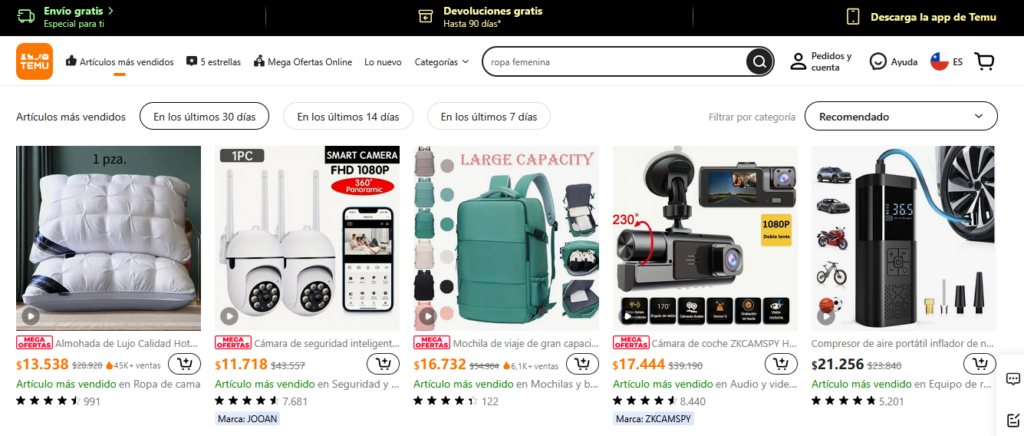
Temu hired the localization team at Day Translations to help it get its message across and make sales. Now, when you search the Temu website, the technology recognizes important information such as your location and your internet language settings to provide a customized user experience in your language and national currency.
3. The Simpsons: Relatable in Any Language
The Simpsons isn’t just a hit show in the United States. This animated series, on the air for over 35 years, is one of the most watched shows around the world.
Its success is thanks in large part to audiovisual translation teams that decided to localize the script versus simply translating it into different languages. This localization means that cultural references and humor are tailored in the dubbing to resonate with different cultural audiences.
For example, Bart Simpson’s catchphrase “Eat my shorts” is translated in the French version as “Va te faire shampouiner,” which literally means “Go shampoo yourself.” This phrase maintains the rebellious tone of the original while using an expression more familiar to French viewers.

Additionally, character names and settings are adapted. Sideshow Bob becomes “Tahiti Bob,” and the family’s dog, Santa’s Little Helper, is called “Petit Papa Noël,” to align with cultural references and have French-speaking audiences laughing alongside this typical American TV family.
Such localization efforts demonstrate how good dubbing goes beyond mere translation. The most successful global shows know how to adapt to different cultures to ensure their content is relatable (and bingeable!) to the target audience.
4. WOM: A Localized Marketing Success Story
WOM is a mobile telecommunications company that entered the Chilean market in 2015 thanks to an unconventional, localized marketing scheme. Originally founded as a brand under the UK-based investment group Novator Partners, WOM entered Chile by acquiring Nextel Chile and rebranding it with a disruptive, consumer-first approach.
The name “WOM,” short for “Word of Mouth,” reflects the company’s ambition to grow through buzz and customer loyalty rather than traditional, top-down advertising. WOM’s success and what truly set it apart in Chile was its clever use of highly localized marketing campaigns.
Rather than relying on generic or corporate messaging, WOM embraced Chilean culture and humor head-on, incorporating modismos—irreverent Chilean slang and regional expressions—into its ads. From jabs at competitors to tongue-in-cheek social commentary, WOM’s ads speak in a way that feels authentic, funny, and refreshingly direct to Chilean audiences.
This unapologetically local voice helped WOM cut through the noise in a market long dominated by more conservative, established players like Movistar, Entel, and Claro. By 2023, WOM had secured a spot as the third-largest mobile operator in Chile, boasting a double-digit market share.
Its early success is often credited to the relatability and cultural fluency of its brand voice. This bold move earned it both attention and trust from consumers, particularly younger users tired of traditional telecom giants.
The Facebook post featured below is a great example of WOM’s mastery of the local slang, culture, and history, as well as its willingness to take risks with hilarious, albeit irreverent, plays on words in its advertising.
The ad, which was posted on national holiday May 21st, features Chilean Navy officer Arturo Prat, who was labeled a hero during the War of the Pacific when he sacrificed his life in an attempt to jump from his ship to take over his opponent’s.
The phrase “Señores, hoy me lanzo,” is a clever double entendre: a Chilean idiomatic expression that essentially means “Today I’m going all out,” but which literally translates to “Today, I’m jumping.” This dark humor hinting at Captain Prat’s last act of patriotism is localization at its finest.

5. Bermuda Work Visas
The owner of a Canadian construction company won a bid to build a luxury hotel on the island of Bermuda. The company, which had just wrapped up two hotel builds on the beach in Varadero, Cuba, had a labor force comprised largely of Cuban and Dominican workers.
Instead of laying off the builders and painters he’d already trained and trusted, he was now faced with the challenge of getting them all temporary work visas to enter Bermuda.
Due to budget constraints, and the task of translating medical records, police clearance certificates, and letters of reference from Spanish to English, the owner spoke with Day Translations and ultimately agreed to go the translation route.
In this case, comprehension was the priority, and there was no need to localize the documents specifically for Bermuda. Besides, the consulate was used to receiving files translated from all over the world.
Day Translations put together a team of translators and a project manager to oversee and proofread the final documents. And hundreds of Cuban workers were granted their work visas.

How the Translation and Localization Industry Is Evolving
The translation and localization industry is undergoing a huge transformation fueled by rapid advances in technology and changing demands when it comes to global content. AI-powered translation tools like DeepL and Google Translate have made instant translation more accessible, reducing costs and turnaround times for simple tasks.
But while some translation tools are just a tap away, the proliferation of AI-generated content is also generating a backlash. An overdependence on technology has led to an abundance of mistranslations, which have fallen through the cracks of decreased human oversight.
Clients who depend on high-quality translation are realizing the limitations of AI and running back to trusted translation agencies.
In fact, localization is one of the areas where AI-generated content faces the most criticism. In spite of large TMS platforms offering fast and easy localization solutions, technology has not yet found a way to replace humans in their understanding of local slang, cultural nuances, and user experience.
As streaming services, mobile apps, and publishers lean further into AI translation and subtitling, consumers and human translators are pushing back. It’s likely we’ll see more of a balance between translation and localization tools with human editing and oversight in the future.
We may also witness traditional translation roles shifting to multidisciplinary localization teams concerned more with quality and cultural relevance.
Day Translations: Bridging Global Markets with Cultural Accuracy
At Day Translations, we help brands bridge the language and cultural gap through expert content translation and localization. We have a team of certified translators and localizers who speak over 100 languages and are located around the world.
These local language experts work with our in-market consultants to make sure every word, image, and user interaction is culturally appropriate. From UI design to cultural idioms, we deliver content and software localization that feels natural—because it is.
Whether you’re launching a multilingual website, interested in learning more about video game localization, or creating a region-specific marketing campaign, we customize every project based on your unique needs.
Our team combines linguistic excellence with cultural intelligence and technical know-how so you can connect authentically with customers around the world.
Let Day Translations help you speak the language, and the culture, of every market you serve.

Written by
Kimberlyn Owens-HughesKimberlyn has 20+ years of experience in the language field. With a BA in Spanish and an MA in Teaching English as a Foreign Language, she moved from her home in Nashville, Tennessee, to Valparaiso, Chile back in 2006. Soon after, she began collaborating as one of Day Translations' first Spanish-to-English translators. Over the years, she has shared her passion for language as an English instructor at local Chilean universities, and as a professional translator for the financial, legal, academic, and tourism sectors. She enjoys learning new things in her research and work as a translator, but her true love lies in literature, writing, learning new languages, and travel. As Day Translations' Content Manager, she is able to cultivate this love of language and writing to share her passion and expertise with the world.
Stay in the loop
Get the latest articles on translation, localization, and language delivered straight to your inbox.