The Meaning of the Word Robot: How Forced Labor Shaped the Word for Machines
The word “robot” might conjure images of futuristic machines, sleek metallic beings, or even the helpful household assistants of science fiction. But the origins of the term are far from robotic factories or artificial intelligence. Instead, it has roots in a much darker and deeply…

4 min read
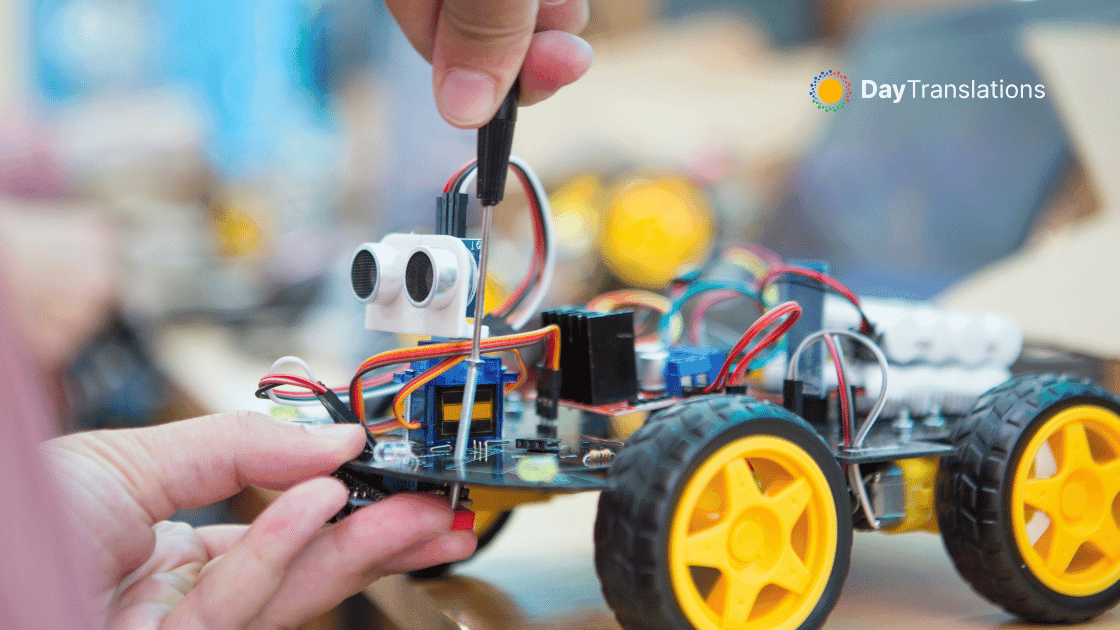
The word “robot” might conjure images of futuristic machines, sleek metallic beings, or even the helpful household assistants of science fiction. But the origins of the term are far from robotic factories or artificial intelligence. Instead, it has roots in a much darker and deeply human experience: forced labor and servitude. In this week’s installment of Mystery Mondays, we explore the meaning of the word robot and how it has evolved over the ages!
The Birth of the Word “Robot”
The word “robot” was first introduced in 1920 by Czech writer Karel Čapek in his play R.U.R. (Rossum’s Universal Robots). In the play, “robots” were not mechanical beings but rather artificially created humans designed to perform menial tasks and labor for their creators. Over time, these robots revolt, questioning their servitude and humanity’s right to control them. This storyline introduced one of the earliest literary explorations of the ethical dilemmas surrounding artificial labor.
But where did Čapek find inspiration for the word “robot”? The term comes from the Czech word “robota,” which translates to “forced labor” or “drudgery.” In medieval times, “robota” referred to the unpaid work peasants were obligated to do for their landlords, a system deeply tied to feudal oppression. This grim history of labor exploitation gave birth to the term we now associate with autonomous machines.
From Human Labor to Mechanical Precision
After R.U.R. was published, the word “robot” quickly gained traction. It captured the imagination of audiences and scientists alike, becoming a convenient term to describe mechanical devices designed to perform repetitive tasks. By the mid-20th century, as advancements in engineering and computing grew, the term shifted entirely to its modern meaning: automated machines that can carry out complex tasks, often replacing human labor in factories and beyond.
While today’s robots are far removed from the oppressed peasants who inspired the term, the connection to labor remains central. Robots were “born” to work. From assembling cars to cleaning homes, they’ve been engineered to handle tasks that humans either cannot or prefer not to do. The irony is that, unlike their fictional counterparts in Čapek’s play, real-world robots have no capacity for rebellion (yet).
Robots and Society: A Love-Hate Relationship
The rise of robots has sparked debates eerily similar to those in Čapek’s play. While robots have revolutionized industries, increasing efficiency and reducing costs, they’ve also raised concerns about job displacement and the ethical treatment of artificial intelligence.
Consider these stats:
- Global Robot Use: According to the International Federation of Robotics, there were approximately 3.5 million industrial robots in operation worldwide by 2021, a number that continues to grow.
- Job Impact: A report by McKinsey estimates that by 2030, up to 800 million jobs could be displaced by automation, although many new roles may emerge.
- Human Aid: Robots aren’t just about industry—they’re also making strides in healthcare, education, and elder care, offering companionship and assistance where humans fall short.
The Evolution of Meaning
The word “robot” has evolved far beyond its original context. Once a term tied to the oppression of feudal labor, it now represents progress, innovation, and the ongoing quest to push the boundaries of human ingenuity. But the history of and meaning of the word “robot” serves as a reminder: every technological advance carries with it echoes of the past, and the lessons we’ve learned (or failed to learn) about power, labor, and humanity.
So, next time you encounter a robot — whether it’s vacuuming your floor or performing surgery — take a moment to appreciate the journey of the word itself. From the toil of peasants to the marvels of modern technology, “robot” embodies both the struggles and the triumphs of human history.

Written by
Seldean SmithSeldean is a multi-skilled content wizard that loves digging into all things language, culture, and localization.
Stay in the loop
Get the latest articles on translation, localization, and language delivered straight to your inbox.