Romania’s Languages: What Languages are Spoken in Romania?
Located in Southeastern Europe, Romania is a beautiful country with rich cultural traditions, unique and tasty cuisine, and great and exciting places to visit. All of this is great, but what do you know about Romania’s languages? Romania has a distinctive historical background rooted in…

5 min read
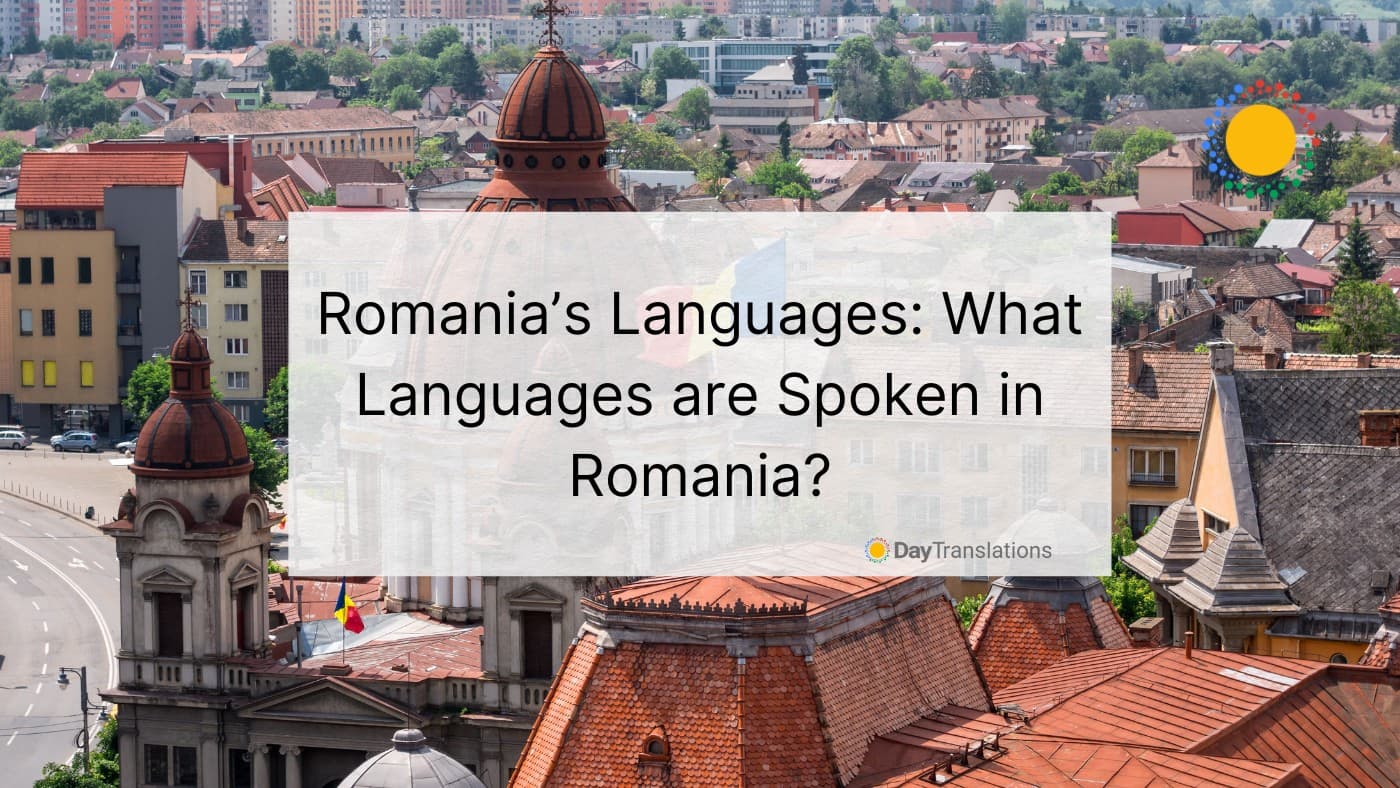
Located in Southeastern Europe, Romania is a beautiful country with rich cultural traditions, unique and tasty cuisine, and great and exciting places to visit. All of this is great, but what do you know about Romania’s languages?
Romania has a distinctive historical background rooted in its location, which affects the languages spoken. Both the official and secondary languages of Romania have an exciting story behind them.
We hope you’ll stick around and keep reading to find out more about the languages spoken in Romania, there might also be some fun and interesting facts that we’ll share along the way that you probably didn’t know.
The Official Language
Romanian
The official language of Romania is Romanian. It is currently spoken by approximately 91% of the population as their primary or first language. Romanian is a romance language that falls into the sub-branch of eastern romance languages. This means that its origins have a Latin base and not a Slavic one, as many would think based on much of Romania’s history.
This is because Romania borders Hungary, Turkey, and Bulgaria, which heavily influenced the Romanian language that the population speaks today.
Because Romanian is a romance language, it means that many of its root words are similar to those found in Italian, French, and Spanish (other romance languages). There are different dialects within the Romanian language that were influenced by the occupancy of the Romans within the Romanian region (on the south side of the Danube River) roughly 1700 years ago.
The Latin and Balkan languages were fused to make one of the various dialects of the Romanian language that exists today. An interesting point to note is that the Danube River is today used as one of the borders between Romania and Bulgaria.
Since 2013, the Romanian language has had its own official holiday in Romania. It is called Romanian Langauge Day and is celebrated on the 31st of August.
Romania’s Languages – Minority Dialects
Apart from Romanian being the official language of Romania, other languages are spoken within the country. These languages are classified as a minority because a few people speak them compared to those who speak the official language.
That said, some laws are in place regarding the rights of minority languages. Some of these languages also have co-official status, which means that it has full status, like that of the official language, and can be used at both the local and government level to carry out business, for example.
With this in mind, Romania has all of 14 other living languages apart from its official language, and we’ll explore a few in detail below:
Hungarian
After Romanian, Hungarian is considered the second largest minority language spoken in Romania. Since 2011, statistics show that there are just a little over 1.2 million native Hungarian speakers in Romania. That works out to around 6.1% of the entire population. The majority of Hungarian speakers reside in Transylvania.
- Fun fact, Transylvania was part of the Kingdom of Hungary right up until the end of WWI.
Romani
The second largest minority group is the Roma. In all, there are roughly over 200,000 Romani speakers, which amounts to just around 1.1% of the entire Romanian population.
There are various dialects of the Romani language, including Balkan Romani, Carpathian Romani, and Vlax Romani.
There are signs within 79 communes and 1 town that display Romani. It also exists for administrative and educational purposes within these areas.
Ukrainian
Roughly just a little over 55,000 people speak Ukrainian within Romania. These speakers are primarily concentrated in the Maramureș County region. Currently, they make up around 6% of the population.
- An interesting fact is that Ukrainians make up the majority of 4 Romanian communes: Bistra, Maramureș, Rona de Sus, Știuca, and Copăcele.
German
Within Romania, there are quite a few groups of Germans. The most prominent groups are known as the Transylvanian Saxons and the Banat Swabians. Germans are the 4th largest ethnolinguistic group in Romania, with a population of approximately 45,000 people.
Turkic Languages
2 Turkic languages exist within Romania. They are Turkish and Tartar.
- Turkish – Around 28,000 people speak the Turkish language in Romania, accounting for approximately 0.1% of the population. This community has its legacy based on the Ottoman Empire’s rule in Romania.
- Similar to Turkish speakers, Tartar speakers make up only around 0.1% of the population with roughly 21,000 people. More specifically, they speak the Crimean Tartar language, with the more significant part of this community residing in Constanța County.
Final Thoughts
Romania has an extensive language history that is worth learning more about. We hope we were able to help you learn a little more about Romania’s languages and how they contribute to the country’s cultural diversity!
Don’t forget that at Day Translations, we love languages. If you need translation, localization, interpreting, or AVT services, we’re here to help you 24/7, 365 days a year. Contact us now to get your free quote.

Written by
Kayan MilwoodKayan is a multi-talented writer based in the beautiful island of Jamaica. Her strong point is ideation and she loves to take on new challenges.
Stay in the loop
Get the latest articles on translation, localization, and language delivered straight to your inbox.