Idioms and Untranslatable Words: The Hidden Challenges of International Diplomacy Translation
In modern times, international diplomacy runs on the precision of words. Every treaty, every negotiation, every statement must be meticulously crafted to avoid misinterpretation. Yet, language is anything but precise. Idioms, cultural nuances, and untranslatable words create an intricate puzzle for translators who serve as…

6 min read
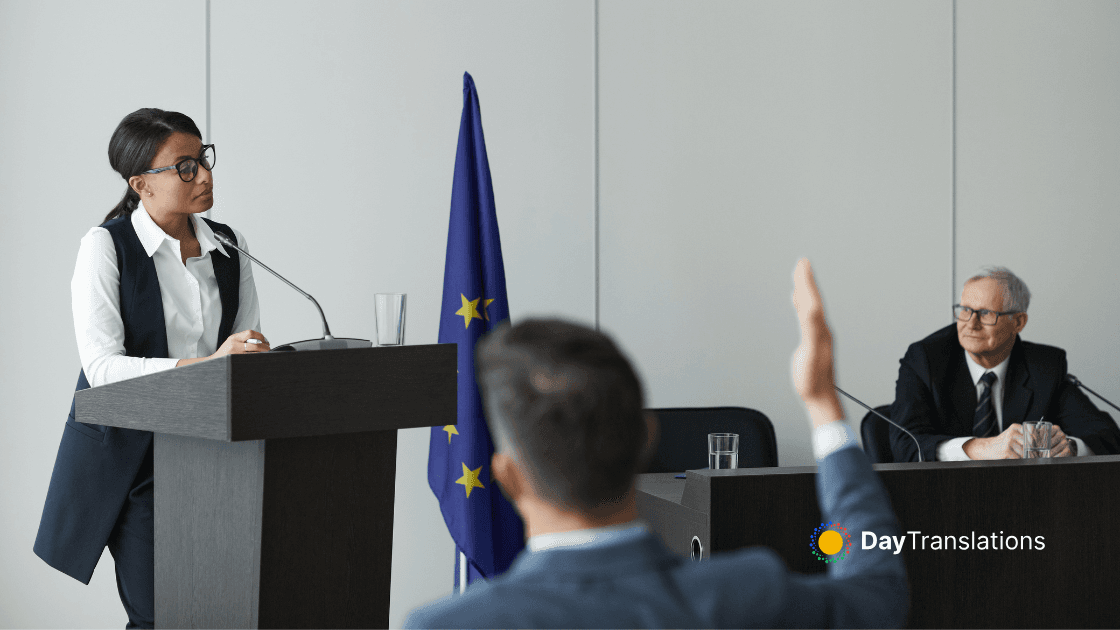
In modern times, international diplomacy runs on the precision of words. Every treaty, every negotiation, every statement must be meticulously crafted to avoid misinterpretation. Yet, language is anything but precise. Idioms, cultural nuances, and untranslatable words create an intricate puzzle for translators who serve as the invisible architects of global dialogue for international diplomacy translation. That’s why it’s important to take a deeper dive into the nature of frequent misunderstandings. If we are to prevent them, that is. Let’s take a look at these notorious linguistic kerfuffles.
The Delicate Balance of Meaning
Translating diplomatic discourse is not a straightforward task. Words carry history, emotion, and intent that often do not cross-linguistic borders intact. An English phrase like “kicking the can down the road” conveys the idea of postponing a problem, but a direct translation might leave foreign diplomats picturing someone literally kicking an object.
Similarly, the Russian idiom “на верху вист, внизу плюшки” (“at the top, a whist; at the bottom, pastries”) might make sense to a native speaker familiar with card games and hidden rewards but would leave an English audience perplexed.
Diplomatic translation requires more than just linguistic skill; it demands a deep understanding of cultural and historical context. What sounds neutral in one language may carry unintended connotations in another. A seemingly innocuous phrase in one culture may be offensive in another, which can derail negotiations before they even begin.
Idioms: The Minefield of Misinterpretation in International Diplomacy Translation
Idioms, by their nature, resist direct translation. Consider the French phrase “appeler un chat un chat” (“call a cat a cat”). While it means to be blunt and honest, an English speaker unfamiliar with the expression might think it refers to identifying a pet.
Similarly, a Japanese diplomat might say “顔を緊める” (“to tighten one’s face”), meaning to take something seriously, but a direct translation into English loses its impact.
This becomes particularly problematic when idioms enter official statements. If a diplomat from the U.S. says, “Let’s not put all our eggs in one basket,” the direct translation could confuse their foreign counterparts and make them think they’re in a meeting about poultry. The intended message about risk diversification might get lost, leading to misunderstandings that could have real consequences.
Untranslatable Words: When No Equivalent Exists
Some words simply do not have a direct translation. The German word “Schadenfreude” (pleasure derived from another’s misfortune) has no single-word equivalent in English, yet it encapsulates a specific human experience. Similarly, the Arabic word “taarradhin” refers to a reconciliation where no one feels they lost—a crucial concept in diplomacy, but one that does not exist in many languages.
One of the most famous translation challenges in diplomacy occurred during the Cold War. When Soviet Premier Nikita Khrushchev reportedly said “Мы вас похороним!” (“My vas pokhoronim!”), American officials took it as a direct threat: “We will bury you!”
In reality, the phrase was an idiomatic way of saying “We will outlast you,” referring to the Soviet belief in the eventual triumph of communism. The mistranslation escalated tensions in an already fragile geopolitical climate.
Context is Everything in International Diplomacy Translation
Beyond idioms and untranslatable words, cultural context shapes interpretation. A British diplomat might use understatement to express disapproval (“not exactly ideal”), while an American counterpart might expect a direct critique.
In contrast, Japanese diplomacy often relies on ambiguity to maintain harmony. A phrase like “Kento shimasu” (“We will consider it”) can mean anything from genuine interest to polite dismissal, but a direct English translation does not convey that range of meaning.
Such subtleties influence not just verbal communication but also written agreements. When diplomats draft treaties, every word is scrutinized to ensure it cannot be interpreted in multiple ways. The 1919 Treaty of Versailles, for instance, contained ambiguities that contributed to geopolitical tensions leading up to World War II. In modern diplomacy, legal teams work alongside linguists to avoid such pitfalls.
The Role of Diplomacy Translators
Diplomatic translators do more than convert words; they act as a paraphrasing tool and as cultural mediators at the sa,e to,e. Their job is to ensure that messages are not just understood but understood correctly. This requires an acute awareness of linguistic pitfalls, historical sensitivities, and the ever-changing landscape of international relations.
Unlike technical translators, who work with fixed terminology, diplomatic translators must navigate evolving language trends, political ideologies, and the personal styles of world leaders.
A mistranslation can cause embarrassment, delay negotiations, or even lead to international incidents.
In 2009, a gift from U.S. Secretary of State Hillary Clinton to Russian Foreign Minister Sergey Lavrov famously backfired when a “reset” button was mislabeled as “overload” in Russian. Though a minor mistake, it became symbolic of the complexities in U.S.-Russia relations.
Finding Solutions: How Diplomacy Bridges the Gaps
To avoid linguistic missteps, diplomatic teams use a variety of strategies, with the most important being:
- Paraphrasing instead of literal translation – Instead of direct translations, phrases are restructured to fit cultural contexts. A skilled translator would replace “kicking the can down the road” with a phrase that conveys postponement in the target language.
- Contextual notes – When signing treaties, side notes explaining potential ambiguities help prevent future disputes. The European Union, dealing with 24 official languages, employs extensive documentation to ensure consistency.
- Back-translation – This process involves translating a document into another language and then translating it back to the original. If the meaning shifts, adjustments are made.
- Linguistic diplomacy training – Many diplomats undergo training to understand how their words might be interpreted. Awareness of cultural sensitivities reduces the likelihood of miscommunication.
Final Thoughts
With the rise of artificial intelligence, some speculate that machine translation could ease diplomatic challenges. However, AI struggles with idioms, cultural context, and the nuances of intent. No algorithm can yet match a human translator’s ability to gauge emotion, history, and political climate. For now, international diplomacy will continue to rely on human expertise.
As global relations grow more complex, the role of translators becomes even more vital. A well-chosen phrase can build alliances, while a mistranslation can break them. In diplomacy, language is more than just words—it is the foundation of peace, cooperation, and understanding.

Written by
Seldean SmithSeldean is a multi-skilled content wizard that loves digging into all things language, culture, and localization.
Stay in the loop
Get the latest articles on translation, localization, and language delivered straight to your inbox.