Whispers and Wordplay: Inside the World of Children’s Secret Languages
Welcome back to The Language Classroom, where words are more than just words—they’re keys to culture, identity, and connection. Last time, we explored the power of silence in communication. But today, we’re turning the volume back up and diving into a delightfully playful topic: the…

4 min read
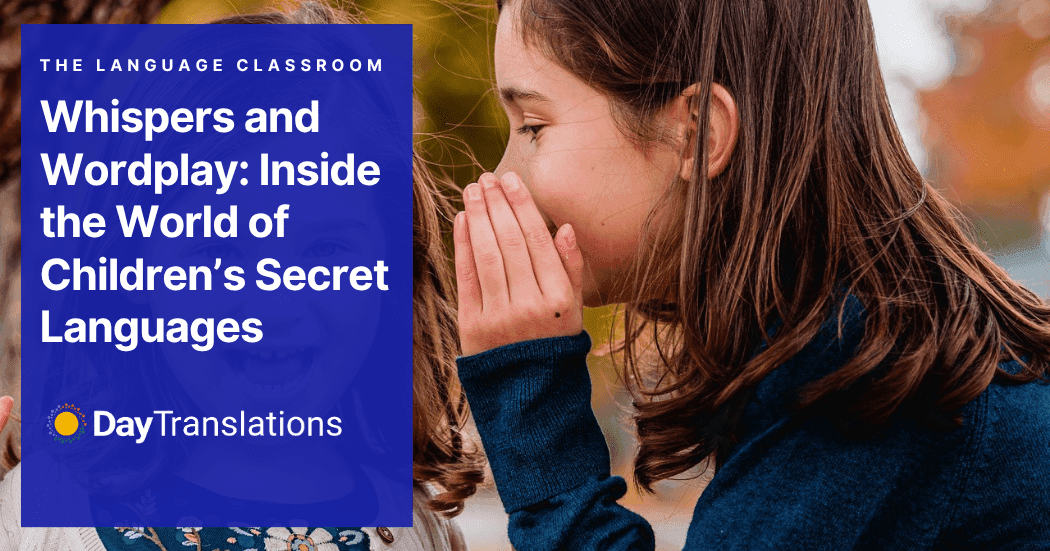
Welcome back to The Language Classroom, where words are more than just words—they’re keys to culture, identity, and connection. Last time, we explored the power of silence in communication. But today, we’re turning the volume back up and diving into a delightfully playful topic: the secret languages of children.
From coded whispers in the classroom to backyard languages only a best friend could decode, children have always invented creative ways to speak in code. These “languages” may be simple, but they show just how imaginative—and linguistically clever—kids really are.
Let’s crack the code on why kids create secret languages, how they work, and what they tell us about the way language evolves.
Why Do Kids Invent Their Own Languages?
Children invent secret languages for many reasons, but they usually boil down to one thing: connection.
- Privacy: Whether it’s to keep secrets from adults or siblings, a private language gives children a sense of control over their world.
- Belonging: Having a shared code creates a tight-knit bond – like a friendship badge you wear in your voice.
- Creativity: Making up new words or rules is fun! It lets kids play with language the way they play with toys.
Psychologists say this kind of imaginative language play helps children develop cognitive flexibility, social skills, and a better understanding of how real language works.
Popular Examples of Kid-Created Languages
You’ve probably heard—or even used—some of these:
Pig Latin
One of the most well-known secret languages. To form words, you take the first consonant or consonant cluster, move it to the end of the word, and add “ay.”
- “Secret” becomes “ecretsay”
- “Language” becomes “anguage-lay”
Pig Latin feels silly, but it teaches kids about phonemic awareness – the ability to hear and manipulate sounds in words, a key reading skill.
Gibberish Variations
There are many versions of this, but one common one adds “idig” or “itherg” into words.
- “Hello” becomes “Hidigellidigo”
- “What’s up?” becomes “Whidigats idigup?”
These games train kids in phonological manipulation – and often leave parents totally baffled.
Twin Speak (Cryptophasia)
Some twins develop their own languages that only they understand. These aren’t always full languages but unique combinations of invented words, intonation, and rhythm.
It’s a rare phenomenon, but it shows the natural human desire to co-create meaning – even from birth.
What Do These Languages Have in Common?
Secret or invented languages may sound different, but they often follow surprisingly structured rules:
- Consistent grammar (even if it’s silly)
- Predictable patterns for transforming words
- Shared understanding within a group
That makes them “mini-languages” in their own right. They’re not random noise—they’re evidence of how humans naturally seek structure and connection through speech.
Why Linguists Love Them
Linguists find these secret languages fascinating because they offer insights into:
- Language development in children
- How rules are invented and shared
- The building blocks of new languages
In fact, studying how kids play with language helps linguists understand how real languages evolve. It also ties into conlangs (constructed languages) like Klingon or Elvish, which are made by adults – but use the same creative instincts kids do.
When Secret Languages Grow Up
Believe it or not, some secret languages have grown into full-blown cultural tools:
- Polari: A coded form of English once used by British actors and the LGBTQ+ community to speak freely when being open wasn’t safe.
- Cant languages: Jargon-rich dialects used by traders, travelers, and even thieves in various parts of the world to communicate in code.
So, even if Pig Latin is just for fun, the instinct behind it is timeless: find your people, speak your truth, and say it your way.
Class Dismissed (For Now…)
Children’s secret languages may be fleeting, but they speak volumes about how we learn, bond, and build identity through words.
Next time in The Language Classroom, we’ll decode the visual side of speech: “Lip Reading and Beyond: Understanding Visual Language Cues.” See you then – and until then, “ood-gay yebay!”

Written by
Day TranslationsThe Day Translations editorial team is composed of seasoned linguists, translators, and localization experts with a deep passion for language and cross-cultural communication. With decades of combined experience in translation, interpreting, and multilingual content creation, the team brings a unique perspective on the evolving world of global communication. Their insights reflect both academic expertise in linguistics and hands-on experience. Each article is crafted to inform, inspire, and support professionals navigating the multilingual landscape.
Stay in the loop
Get the latest articles on translation, localization, and language delivered straight to your inbox.