Bilingualism in America is on the Rise
Scientifically, bilingualism means an individual is able to use at least two languages. The level of proficiency and use of the two can change based on the chances to use the languages and the exposure of the individual to other speakers of the said languages….

8 min read
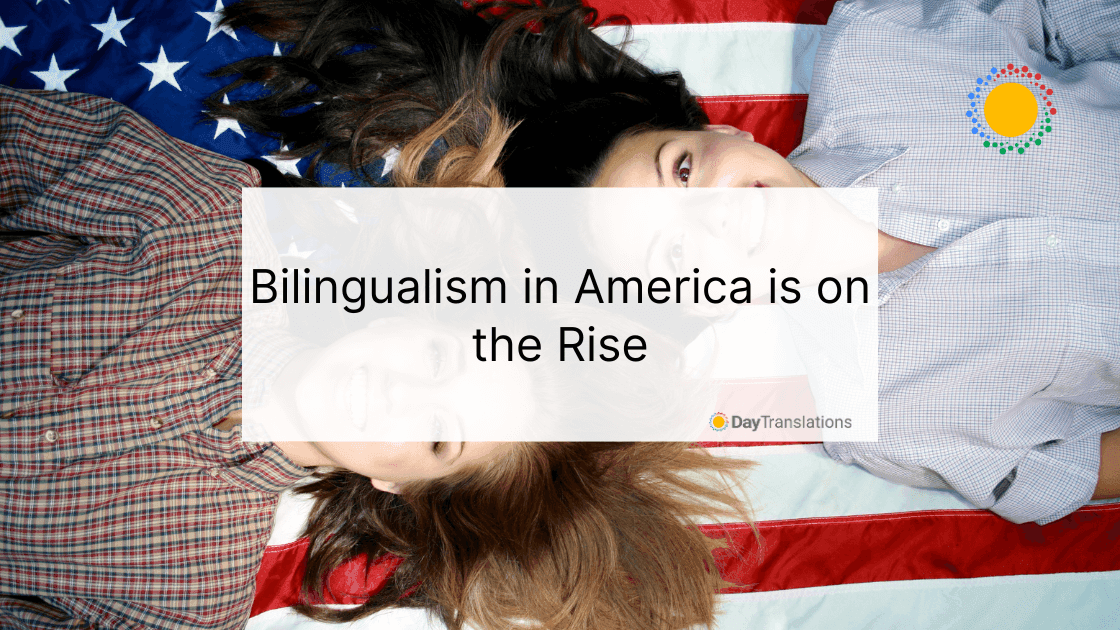
Scientifically, bilingualism means an individual is able to use at least two languages. The level of proficiency and use of the two can change based on the chances to use the languages and the exposure of the individual to other speakers of the said languages.
There are two types of bilingualism.
- Sequential Bilingualism happens when a person had meaningful and significant exposure to another language around age 3 or 4 and after the first language is firmly established. They are called English language learners in the schools in the United States.
- In Simultaneous Bilingualism, the individual was exposed to two languages meaningfully and significantly since birth. In this category, the child’s exposure and use of both languages are equal.
An individual’s bilingual experience is unique as the quality and amount of exposure to both languages varies.
Status of bilingualism in the U.S.
Ten years ago, a Gallup poll revealed that about 25% of the U.S. population spoke another language aside from English. They have the knowledge and ability to hold a conversation in another language. Among the top languages at that time were Spanish, French and German, based on consecutive ranking.
The same poll also revealed that many Americans believe that knowing how to speak a second language is valuable, although they do not think that it is a necessary skill.
However, the ability to speak two or more languages declines, due to the following reasons:
- Age. The facility to speak another language decreases when individuals are in their 50s and 60s, and further decreases as they advance in age
- Advanced education. More high school graduates are bilingual. Their level of bilingualism decreases when they reach college, graduate from college and take postgraduate education.
- Region. The poll revealed that being bilingual is retained by a higher percentage of people living in the western part of the U. S. followed in sequential order by those living in the East, South and the Midwest.
- Ideology. People that follows a liberal ideology are likely to retain their being bilingual than those who are moderate. People who follow a conservative ideology have a lower level of bilingualism.
The scenario is different now. In 2016, over 12 million children, representing 22% of the child population in the United States spoke a foreign language at home. It was an increase of about 2% since the last decade. California has the highest number of kids who spoke another language at home, with 44%. In West Virginia, only 2% of the child population spoke another language at home.
The increase in the bilingual population was remarkable in New Jersey (from 25% to 30%), Maryland (from 14% to 19%) and the District of Columbia (from 13% to 19%).
Interestingly, Spanish still tops the list of foreign languages spoken at home.
In the non-English speaking homes in the U.S. about 4% of the children or 2.4 million children find it difficult to speak English. In the country, learning English is vital as it helps them participate fully in school and society. Still, it is essential for children to keep their mother tongue. Being bilingual benefits them. It helps them to increase their concentration, focus and ability to solve problems. Aside from these, bilingualism gives individuals stronger connections to family and their country of origin, heightened cultural competence, improved mental flexibility and more opportunities to secure jobs that pay higher.
Benefits of bilingualism
Several studies reveal that early exposure to various languages boosts the communication skills of individuals, aside from the other established list of benefits of being bilingual. This includes delaying the onset of cognitive deficiencies, development of better working memory and increase in executive control.
Learning a new language brings forth several feelings. You feel the frisson of hearing you say new words and get that feeling of exhilaration after understanding sentences that used to be gibberish to you. You start to understand different cultures better and enjoy the convenience of using the right words to express what you exactly feel.
It is safe to say that bilingualism occurs in about half of the global population. But linguist and researchers are still fascinated with the ability of many people to speak several languages.
Insights into bilingualism
Francois Grosjean, a bilingualism expert has written articles and books about bilingualism. He had a blog entitled “Life as a Bilingual” published in Psychology Today. He also wrote a book, “Bilingual: Life and Reality.”
He shared some insights into the life of a bilingual in an in-depth interview.
Bilinguals are seldom fluent in both languages
He said that being bilingual means that a person can use two or more languages in their daily life. Many people think that a bilingual is equally fluent in both languages. However, a bilingual usually has a dominant and non-dominant language.
Bilinguals use and speak their languages in different situations with different people and for different purposes. They do not have to be fluent in both languages. Their level of fluency is dependent on where they live, work, study and their need for the specific language.
No such thing as a monolingual or bilingual cortex
A person may initially use the right hemisphere of the brain while still learning a language, but once the person has mastered it, they are able to use both hemispheres of the brain to access information and speak in the other language. As Pennsylvania State University’s Dr. Ping Li said, there is no bilingual cortex or monolingual cortex. Instead the brain uses the same resources and neural structures to manage a bilingual person’s languages but by different means.
Acquiring an accent in the second language
Some people believe that learning a language is more difficult when a person is older. Many also think that the ability to acquire the accent of the second language is limited. However, researchers believe that these people are wrong in their thinking. If one is willing, age is not a factor in learning another language. They can learn the language and support their learning by language immersion – more contacts with native speakers of the language, staying in the country where the language is spoken and conducting in-depth study of the pronunciation and phonetics in order to pass as a native speaker.
Code switching is normal in bilingual children
The development of bilingualism is children and the chance of mixing the languages should not cause parents to worry. Code switching is normal particularly when the parents are bilinguals as well. It is important for the parents to choose the right methods when they teach their children their own languages and decide on the support they will employ while teaching the other language to their child.
Bilinguals behave differently in each language
Bilinguals may appear like a different person when speaking another language. They do not change personality per se. What changes is their demeanor as they take on the persona of a person speaking a different language. There are languages that require the person to talk in a rather stronger or tamer tone, speak faster or talk louder. The change in the behavior may also be due to the context or the situation that can also happen with monolinguals.
Mental translation is not needed by bilinguals
While learning a language, students often mentally translate what they are learning in their native language (L1) before they can fully appreciate the other language (L2). However, when a person is bilingual and use both languages everyday, they choose the language automatically and they rarely need to translate L2 to L1.
Bilingualism provides different perspectives to the person. They become more open minded and more accepting of other cultures. Aside from gaining more opportunities to find a lucrative job, bilingualism offers them higher social mobility. They are also more confident in communicating with other people. Bilingualism enables them to talk with people from other countries. It gives them the inspiration to learn other languages. It enriches their lives and their cultural ignorance is reduced. Bilinguals think more rationally as well.
Being bilingual is essential if you are planning to start a career as a translator. But this is not enough. You need to obtain a bachelor’s degree or at least start by being certified. If you are interested in the profession, we have a detailed infographic on how to become a professional translator.
If you require high quality translation, give Day Translations, Inc. a call. We have teams of native speakers who can fulfill your translation needs anytime, wherever you are located. Our human translators have years of experience in their own field of expertise, to ensure that our clients get the best translation they expect from the experts. You can reach us at 1-800-969-6853 or send us an email at Contact us. We are open 24 hours a day, seven days a week, and 365 days a year. Let us know the type of translation you require and the language pair and we’ll take care of the rest.

Written by
Bernadine RacomaBernadine Racoma is a senior content writer at Day Translations, a human translation services company. After her long stint as an international civil servant and traveling the world for 22 years, she has aggressively pursued her interest in writing and research. Like her poetry, she writes everything from the heart, and she treats each written piece a work of art. She loves dogs!
Stay in the loop
Get the latest articles on translation, localization, and language delivered straight to your inbox.