Albinen: The Beautiful Village That Pays You to Stay
If you’ve been dreaming of living in Switzerland, you might get the chance this time in Albinen. The municipality is located in the district of Leuk, which is a part of Valais. The canton is in the southern part of Switzerland, where the famous Matterhorn…

8 min read
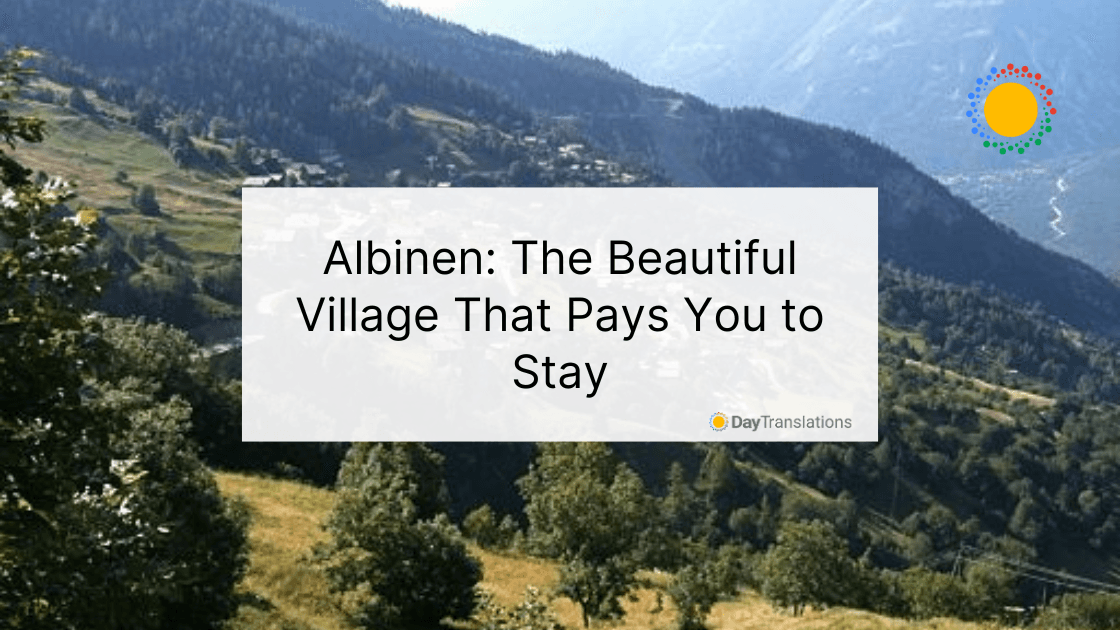
If you’ve been dreaming of living in Switzerland, you might get the chance this time in Albinen. The municipality is located in the district of Leuk, which is a part of Valais. The canton is in the southern part of Switzerland, where the famous Matterhorn Mountain is found. Valais is in the heart of the Swiss Alps.
From Valais, you can reach Albinen by traveling by car for 41.2 kilometers. It will take 58 minutes via Route 9.
The Village of Albinen
The village of Albinen is located on Rhone Valley’s sunnier side. It is a mountain village that is considered as one of Valais’ most beautiful villages. About six kilometers away are Leukerbad’s famous thermal springs.
Albinen is a peaceful and quiet village and it’s going to be awesome to breathe in the fresh mountain air while feasting your eyes on the spectacular view. It is a great holiday and vacation destination.
Guided tours around Albinen are available. One of the unique attractions in the village is the Albinen ladders, which is an alternative way to reach Leukerbad faster. Who, why and when the Albinen ladders started, nobody knows. These eight well-maintained wooden ladders divide the climb up the 100-meter high mountainside in eight stops. In the past, the ladders were used by traders as walking on the valley floor takes longer.
Now, the ladders are securely bolted in place, with steel guard wires bolted on the cliff’s face where you can clip your carabiner for safety. If you are afraid of heights, there is a tunnel bypass. New roads also make traveling to other areas outside the valley easier.
Albinen’s History
Scholars cannot determine if the name of the village came from Arbignon, which means “forest” or from Albignion that means ”alp.” Both are terms from Old French. Since there is no evidence to prove if the area was wooded or pastureland in the past, the source of the name is still debatable.
What is known is that there were already settlers in the area during prehistoric times, proven by the remains of Celtic graves in the area. Germanic-speaking tribes arrived and settled in the region in the 11th century. They cultivated the area and built a permanent settlement.
Albinen comprises the communities of Dorben and Tschingeren. The former is the most important as it is the site of the original village hall or thingstead.
In the past, the village of Albinen was connected to the parish of Leuk. In 1737, it was declared as a separate parish and even had its own church.
Isolation
The essential charm of Albinen is its geographical location over the sharp incline of the Dala gorge. It provides stunning views of the surrounding valleys and mountains but its location also causes the area to be isolated. It does, however, makes the residents self-sufficient, with most of them working in agriculture.
Before roads were built, only steep footpaths allowed people to reach Albinen. According to Switzerland’s Geographical Encyclopedia, there was no salthouse, shop or tavern to be found in Albinen in 1902. At that time, the village has 301 residents, historically the highest population achieved by Albinen. Since the 1940s, the residents have been leaving the village.
Despite the accessibility of the place by car since the 1960s, Albinen’s population continues to decline. The concrete roads brought in tourists, giving the residents an alternative income source.
Heritage Site
The entire village of Albinen is a Swiss heritage site because of its historic architecture, visual appearance and its location. The community is densely developed, with the residential and other buildings tightly constructed, using minimal land space. Unlike other villages in the region that are located on mountain terraces, the houses and buildings of Albinen look like they are clinging to the mountain slope. Notable are the historical buildings that were built during the 17th and 18th centuries. These structures are very well preserved, adding to the charm of the village of Albinen. It’s an extraordinary sight to see the functional and residential building built uniformly.
Why the Village of Albinen Pays People to Stay
Late last year, the village of Albinen made the news. The story says that the Swiss municipality is offering money to entice non-residents to live in the village, and get this – the deal is for 10 years minimum!
The story also mentioned that those who will pass their criteria would each be given $25,200 if they were adults. Each child will be paid $10,000. The offer’s very irresistible, isn’t it? Seventy-one of the Albinen residents approved the initiative in November 2017.
But before you start selling your furniture and appliance and packing your bags, wait! There are other conditions that you have to consider, so read on.
Why is Albinen Making This Move?
The main reason is to increase its number of residents. Right now, the population, which continues to dwindle, is only 240. With many of the residents leaving their village, the village officials want to ensure that they will improve their economy by bringing in new residents. Most of those leaving the village are young people, particularly those with families of their own. The recent departures caused the closure of the local school.
What prompts people to leave Albinen? The place is very habitable, it has scenic views that are IG-worthy, it’s clean and peaceful, and you inhale pollution-free air.
Here are some of the things you have to consider before you lodge in your application.
- The village is relatively small. Its total size is 6.01 square miles or 15.56 square kilometers. About 10% of the land is not suitable for agriculture.
- The location is about 4,300 feet or 1,300 meters above sea level.
- Only 16 people live within one square kilometer.
- Jobs are scarce. The annual subsidy given by the town for its residents is not enough.
- Albinen is hopeful they can attract at least 10 families to move to their village within the next few years. They are allocating $100,000 annually for the project.
- To qualify, the applicant has to be at least under 45 years of age.
- The applicant must be willing to invest a minimum of US$201,600 or 200,000 francs to buy or build a home, which should be the applicant’s primary and permanent home.
- The agreement is that the applicant should be willing to stay in Albinen for 10 years. Should the successful applicant decide to leave Albinen before the end of the contract, they have to pay back the monetary incentive given to them in full.
- One of the most important considerations is residency. The foreign applicant has to secure the Swiss C permit or the permanent residency permit. This means you have to apply as an immigrant and receive the residency permit in order to qualify to stay in Albinen.
Some of the conditions for non-EU residents to acquire a Swiss C permit:
- Has lived in Switzerland continuously for 12 years
- Has continuous residency in Switzerland for 5 years using a B permit
- Married to a Swiss citizen
- Submission of other required documentation for immigration such as clean criminal and debt records and certification of proficiency in the German language
Note: The Swiss passport is one of the most difficult passports to get.
The response from many parts of the world to the Albinen initiative was overwhelming. The office of Mayor Beat Jost was inundated with phone inquiries. The Albinen authorities were quick to correct the media though, for what they believed were misleading media coverage. According to the local officials, the story that came out in the media indicated that it is easy to apply for the initiative, as the conditions attached to the offer were not clearly explained.
First Approval
April of this year, it was announced that a family of three (soon to be four) is the first family approved to move to the village of Albinen. They are from Aargau, a Swiss canton in the northern part of Switzerland. The family were to relocate to Albinen in September.
The village officials are optimistic about their project. After approving the first family, they are studying at least five promising requests. Surprisingly, many of the serious contenders are Albinen villagers themselves.
Need Help with Your Legal Document Translations?
Are you willing to spend the next ten years of your life in an idyllic Swiss town high up the mountains?
Albinen residents speak German and French. A few speak Romansh. If you need translation from any language into German or French, work with the professional translators of Day Translations, Inc. Our translators are native speakers and reside in-country, meaning they not only have a deep understanding of their language but also its nuances and their native culture. It’s an assurance that you will get the most accurate translation possible. Whatever type of translation you need, we are here to help. You can immediately reach us by phone by calling 1-800-969-6853. You can also reach us by email through Contact us. Day Translations is open 24/7, 365 days of the year, so you can reach us anytime you need translation service.

Written by
Day TranslationsThe Day Translations editorial team is composed of seasoned linguists, translators, and localization experts with a deep passion for language and cross-cultural communication. With decades of combined experience in translation, interpreting, and multilingual content creation, the team brings a unique perspective on the evolving world of global communication. Their insights reflect both academic expertise in linguistics and hands-on experience. Each article is crafted to inform, inspire, and support professionals navigating the multilingual landscape.
Stay in the loop
Get the latest articles on translation, localization, and language delivered straight to your inbox.