7 Steps to Proofread a Translated Document Effectively
Translation is not just converting words from one language to another. It is meant to preserve meaning, tone, and cultural relevance. That’s why even the best translators, including AI, can make mistakes in word choice and context preservation. And that’s why proofreading is essential. However,…

5 min read
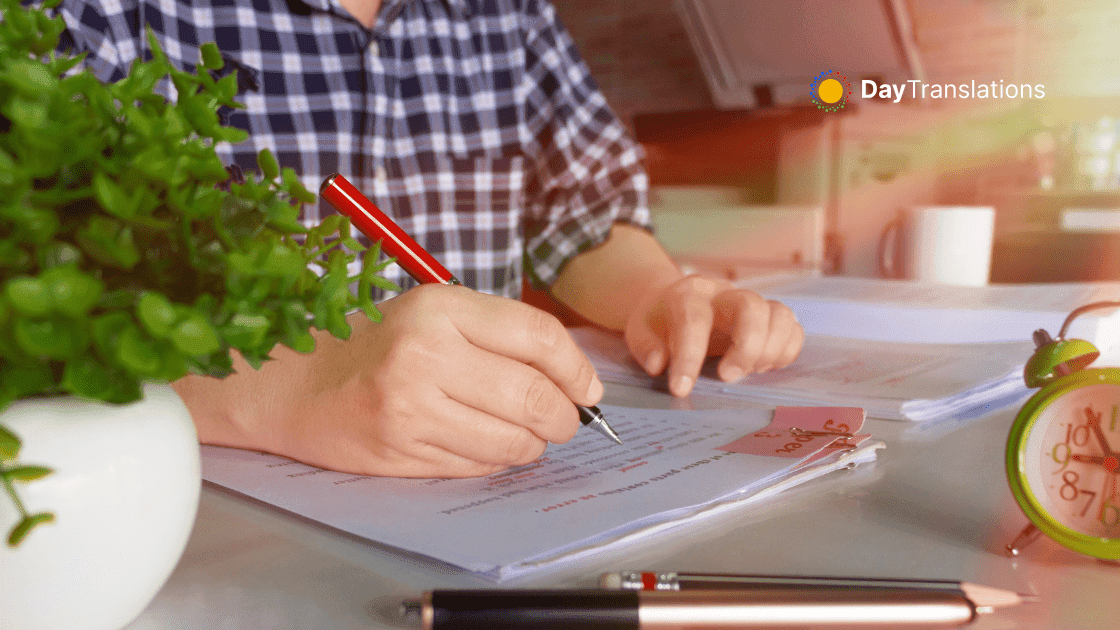
Translation is not just converting words from one language to another. It is meant to preserve meaning, tone, and cultural relevance.
That’s why even the best translators, including AI, can make mistakes in word choice and context preservation. And that’s why proofreading is essential.
However, proofreading a translated document is different from regular proofreading. In this, you need to check readability, grammar, and accuracy, all while keeping the original message intact.
So how do you proofread a translated document effectively? I have some 7 steps that will make this process smoother for you.
When proofreading a translated document, you must make sure that the document says the same thing as the original document. The following 7 steps will help you with that.
1. Compare it with the original text
Your first step should be to check the translation against the original document. Compare the information given in both versions.
Look if the latest version has some missing or added information. See if there are some mistranslations and finally, see if the text’s tone is intact.
A good translation narrates the essence of the original text. It should not sound like a direct word-for-word conversion. So watch for that. If the meaning is even slightly changed, adjust it and ensure accuracy.
2. Read it as a standalone document
After you are done checking the translation against the original, rest for a little and come back with fresh eyes. Then read it again if it were written in the target language.
Your goal must be to see:
- Does it sound natural?
- Would a native speaker write it like this?
- Is the message clear?
If it feels robotic or unnatural, use the AI tools such as online sentence rewriter to rephrase the passage. The sentencerewriter.net will help you adjust the tone and improve the fluency of your text. It has many different rewriting tones for you to select from, like formal, fluency, academic, first person, etc. And the best thing is that its NLP technology keeps the context intact.
3. Check for grammar and punctuation errors
Grammar mistakes are not rare when it comes to translations. Even professional translators and AI can make them. These errors make a document look unprofessional. That’s why using a grammar checker is very important. Tools as the one at ai-detector.info can detect all of them quickly, like:
- Subject-verb agreement errors
- Misuse of commas and punctuation errors
- Incorrect use of verb tenses
- Spelling mistakes
AI grammar checkers are helpful but always do a manual check too. Some errors require human judgment, especially the ones that are grammatically correct but do not sound right.
4. Look for cultural and contextual accuracy
Translations must align with the culture of the target audience. This is as important as the translation itself. So watch out for:
- Idioms and metaphors that do not make sense in the new language (the target audience might take them literally)
- Formality levels (e.g., addressing someone as Mr vs using their first name)
- Measurement units (e.g., kilometers in India vs miles in the USA)
If a phrase seems odd, research local equivalents or consult a native speaker for cultural expertise and find better alternatives.
5. Simplify overly complex sentences
A common translation mistake is making sentences too long or complicated. Some languages naturally use long sentences, but most prefer shorter ones. So when proofreading, if a sentence feels too dense, simplify it.
For example:
- This sentence is complex, “In order to ensure optimal performance, the user must follow the detailed instructions provided in the manual.”
- This one is shorter and direct, “For the best performance, follow the manual’s instructions.”
Simply break long sentences into two. Remove extra words, convert passive sentences into active ones, and make the text easy to read. The AI text proofreader by Qozex.com can help you detect all that easily. Just paste your content in the tool and click “Proofread.” It is specialized in picking mistakes according to readability and context.
6. Verify each term by reading separately
If you’re proofreading a technical, legal, or medical document, focus on industry-specific terms. Because even small errors in translation can change the meaning significantly.
Plus the grammar tools do not have all the words in their vocabulary, so you must double-check each word after AI tools are done checking.
The best way is to read the content backward. Yes, it will not make sense, but it will allow you to separately analyze each term. You see, sometimes we overlook spelling mistakes while reading a sentence in a flow. So this method will help you with that.
7. Leave some time before completing a final review
The ideal way would be to rest between each step, but it will make your work slower. So if you are not able to rest between every step, at least take some time before reviewing the document for the last time.
When you read a text with a fresh mind, you see it differently and find new mistakes. Every proofreader or editor uses this trick to do their job better.
Conclusion
Proofreading is not just checking for typos. You need to look for accuracy, fluency, and readability while keeping the original message intact.
By following my 7 steps and using the tools I recommend, you can refine translations to sound natural and professional. So take them in your writing and translation works and see how they improve your text and context.

Written by
Sahay SharmaStay in the loop
Get the latest articles on translation, localization, and language delivered straight to your inbox.